

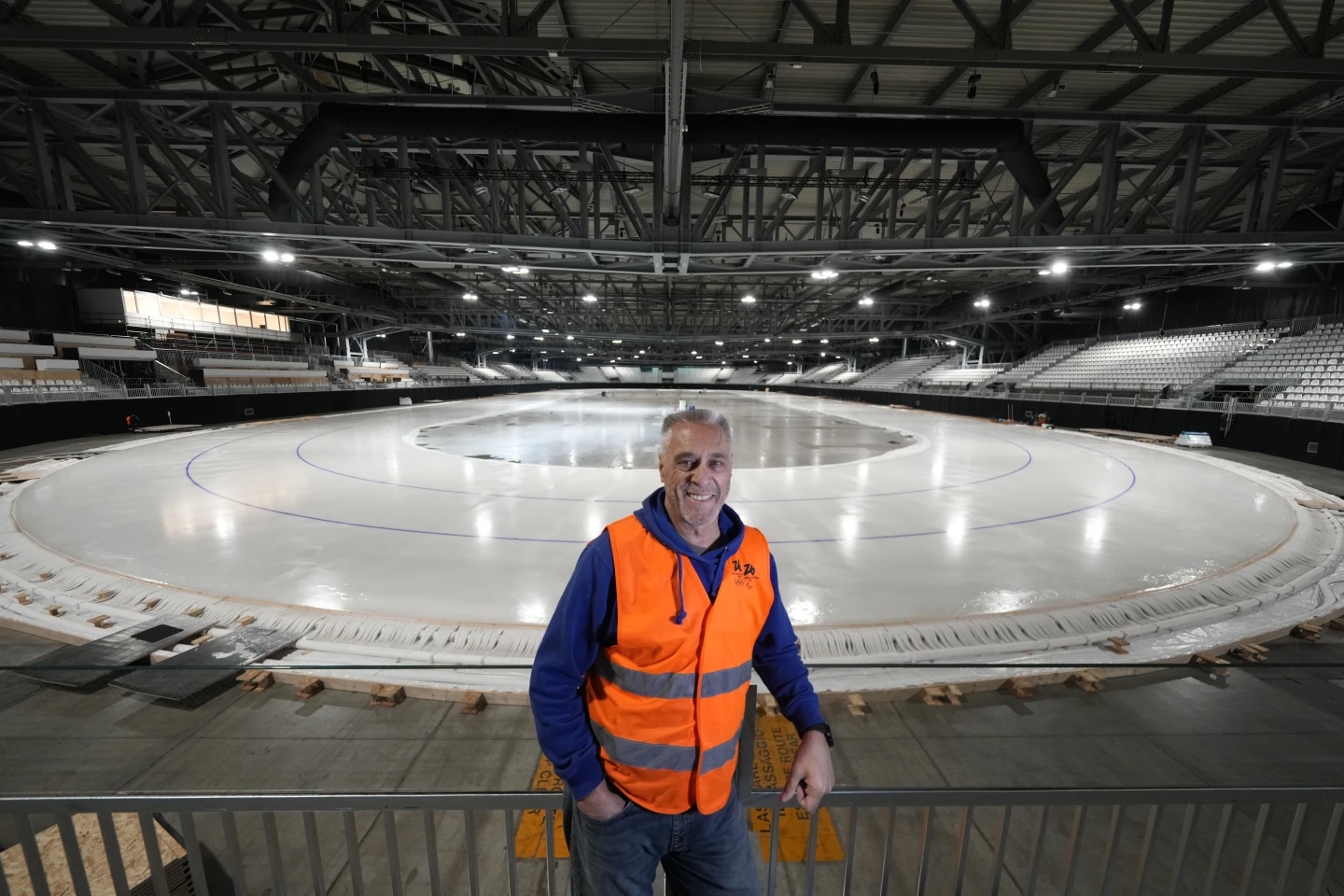
When you think of the Winter Olympics, visions of gleaming arenas, perfectly groomed ice, and athletes gliding at ridiculous speeds probably come to mind. So it’s fitting — and a little thrilling — that this year’s Games added a fresh chapter to that story: Canada’s ice master has just made Olympic history by creating the Games’ first indoor temporary speedskating rink.
Yes, temporary. Yes, indoor. And yes, this is a big deal.
Why it matters Speedskating surfaces are notoriously exacting. The ice needs to be hard and fast for the skaters, but also beautifully even and stable over long competition hours. Traditionally, Olympic speedskating is held in permanent indoor arenas where environmental controls and built-in refrigeration ensure consistent conditions. Building a top-tier temporary rink indoors, inside an existing venue that wasn’t originally designed for speedskating, means pulling off something that blends precision engineering, ice science, and a fair share of ingenuity.
The Canadian behind the magic Canada has long been a leader in ice-making technology — think world-class hockey rinks and ice show productions — and this project put that reputation on full display. The team, led by a Canadian ice technician who’s earned a reputation as an “ice master,” designed and installed a modular refrigeration system, engineered subflooring to precise tolerances, and layered the ice in a way that balanced speed with durability. It’s the kind of work that looks simple on the surface but requires hundreds of tiny, exacting decisions behind the scenes.
Challenges and clever solutions Creating a temporary indoor speedskating rink isn’t as simple as rolling out some ice. The crew had to manage:
- Ambient climate control inside a venue that might not have the ideal HVAC setup for skating ice.
- The insulation and leveling of the temporary floor so the ice surface stays perfectly flat and consistent.
- A refrigeration system that’s powerful enough to keep the ice optimal for long competition days, but modular enough to be installed and removed without wrecking the venue.
- Safety and sightlines for spectators, broadcast needs for TV, and accessibility for athletes and support staff.
Plenty of clever engineering helped smooth those bumps: custom insulation panels, a network of portable chillers, and precise temperature zoning to keep the ice at racing-grade hardness. They also used tried-and-true methods like carefully controlled flooding cycles and meticulous resurfacing to ensure the ice behaved like that of a permanent arena.
Why athletes and fans benefit For athletes, a well-built indoor rink means fewer variables and more predictable conditions — so races are determined more by skill and strategy than by quirks of the ice. For fans, bringing speedskating indoors improves comfort, sightlines, and broadcast quality. And for host cities, being able to install a temporary world-class rink can make the Games more flexible: less permanent construction, faster setup and teardown, and lower long-term venue costs.
A blueprint for future Games This project is more than a one-off engineering flex. It sets a precedent: temporary doesn’t have to mean second-rate. If other Olympic hosts opt for temporary venues to meet sustainability goals, lower costs, or reuse existing spaces, this Canadian-built rink could be the blueprint they follow.
A win for craftsmanship and creativity At the end of the day, this is a story about people who sweat the small details so the world’s best athletes can do what they do best. It’s a reminder that Olympic magic isn’t just about medals and records — it’s also about the unsung craftsmanship and behind-the-scenes problem solving that make those moments possible.
So here’s to the Canadian ice master and the team that pulled off a technical first: they’ve added a new tool to the Winter Games toolbox, and they’ve given athletes and fans alike a smoother, faster, and more adaptable stage for speedskating. That’s something to celebrate — and skate fast for.